
I’m old enough to remember when fluorocarbon was both revolutionary and perplexing. Out of nowhere, it seemed to me in the late 90s, if you weren’t using “fluoro” as your leader in the striper scene, you just weren’t on the cutting edge. It was as if one day it wasn’t there and the next, every shop shelf was loaded with the stuff. Of course, in my late teens, it wasn’t easy parting with so much extra money for a spool of line that didn’t look any different than the cheap Ande monofilament I’d been using for years. We all know now, of course, that there are many benefits to fluorocarbon. It has, in many ways, overtaken traditional monofilament. But nowadays there are so many brands of fluoro available at a wide variety of price ranges, it’s harder to know exactly what you’re buying.
John Whelan works for Seaguar, the Japanese company that invented fluoro way back in the 1970s long before it was available in U.S. stores. Though it was originally very stiff and suitable only for leaders used when targeting large saltwater species, the material has come a very long way. To help you parse out why you need fluoro, how it’s made, why one grade is cheaper than another, and even how to spot fake fluoro, I sat down with Whelan for full-on fluoro history lesson.
Listen to this episode of the Quick Strike Podcast on Apple, Spotify, or wherever you get your podcasts.
Clearly Historic
Fluorocarbon was nothing but a happy accident. According to Whelan, two developers at Seaguar’s parent company discovered it by mistake in 1971. Both avid fishermen, they realized the main compound, polyvinylidene fluoride (which is used in everything from batteries to pipe fittings), could be extruded into a fishing line. Once they got it on the water for testing, the benefits we’re all familiar with now quickly emerged.
“Early fluorocarbon was very stiff,” says Whelan. “It was mainly used as a leader material. You couldn’t spool an entire reel with it in the early days. But it had a lower refractive index than monofilament, which meant it was more invisible in the water. It bends light differently.”
The second key benefit was increased sensitivity. Fluorocarbon has far less stretch than monofilament, which means even the slightest tap will transmit to the rod much faster. That sensitivity, however, does more than help you feel more bites. It also helps you keep better bottom contact — to feel every rock and bump down there — which gives you better control and can help reduce snags.
Chemical Imbalance
As years went on, fluorocarbon advanced. The process of making it was refined, which created softer fluoro that could be used as mainline and fill your entire reel. According to Whelan, however, a byproduct of the rising popularity of the material was an explosion of brands producing their own fluorocarbon. The difference between them and Seaguar, he says, is that Seaguar makes every element of their line. Other brands don’t which, is a reason to consider passing on very inexpensive or off-brand fluoros.
“If the box says ‘100 percent fluorocarbon,’ it’s likely true,” Whelan says. “But where are they getting their resins from? Sometimes resins can be in short supply, or they’re ordering from a company that makes resins for lithium-ion batteries or something else. This can create inconsistencies in batches. We make our own resin specifically for fishing line.”
Not all resins are created equal. Just as you can buy top-shelf house paint or very cheap house paint, while the colors may be the same, the stain resistance, longevity, and so on may not be. Such is the case with fluorocarbon. Inexpensive brands may be chemically up to snuff, but their disappearing ability and abrasion resistance may lack. Take away either of those elements and it’s not worth spending extra on fluoro at all.
Melting Point
To be clear, what Whelan isn’t saying is that all inexpensive fluoro isn’t worthy of casting. Many brands, including Seaguar, make various grades. The more expensive ones have different additives that are more costly, but even lesser grades maintain their invisibility and sensitivity. Still, there are a few things to look out for if you think you just scored quality fluoro for very little money.
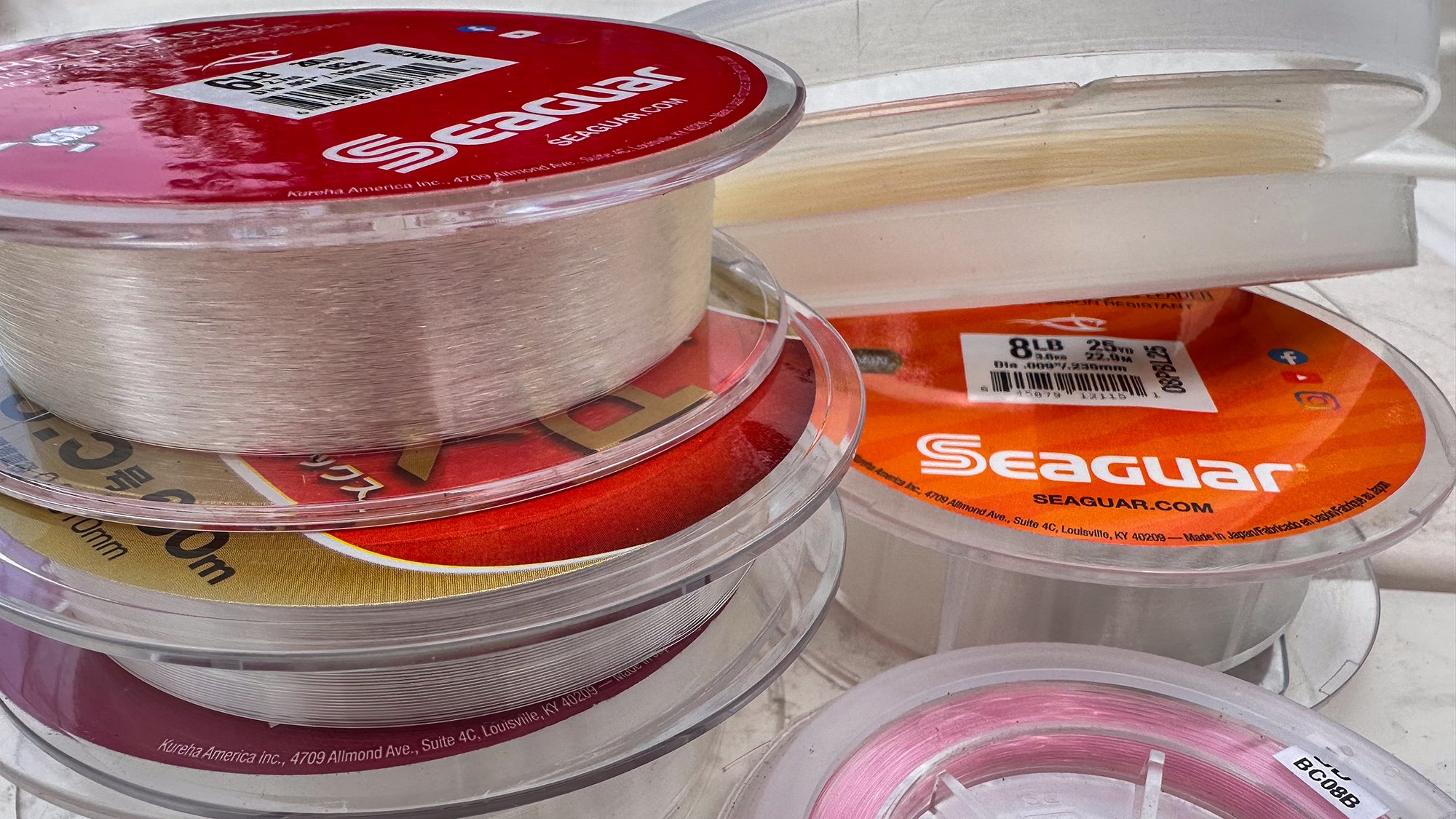
“Fluorocarbon is always clear,” says Whelan. “If you ever seen fluoro with a cloudiness or yellow tint, you don’t want it.”
Read Next: The Best Fishing Lines for Bass of 2026
Another way to test to see if what you purchased is 100 percent fluorocarbon is to hit the end with a lighter. Monofilament will catch fire, whereas fluorocarbon will just char and melt a bit. This trick was figured out decades ago when it wasn’t uncommon to be bamboozled online into buying knock-off fluorocarbon featuring major-label branding. The fact that there was a market for fakes at all, however, just goes to show how much anglers believe its benefits catch them more fish.